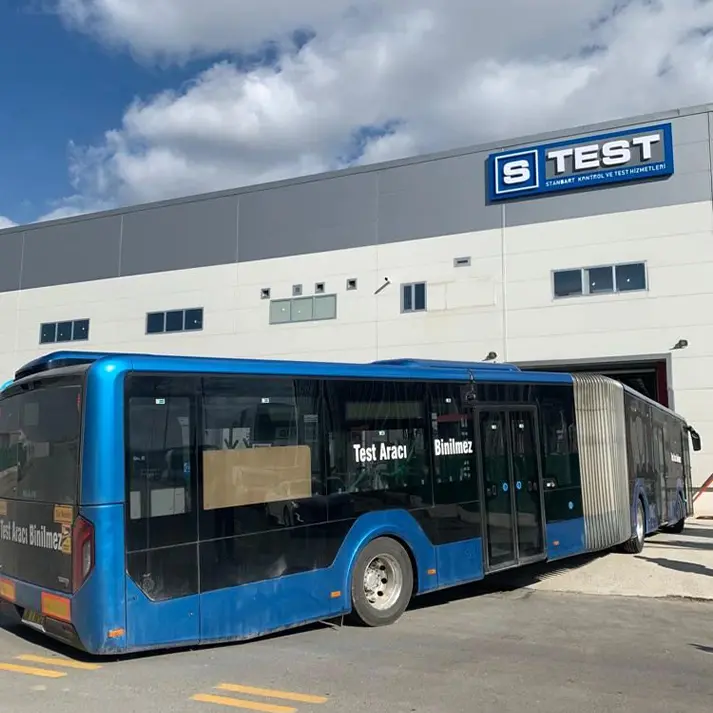
LOW TEMPERATURE TEST
TURKAK Accredited Testing and Verification
STEST is accredited by the Turkish Accreditation Institution (TURKAK) and carries out its testing and verification activities in an independent, competent, and impartial manner in compliance with national and international standards.
Low Temperature Test
The low temperature test is performed to determine the reliability and durability of products under extreme cold environmental conditions. The specimen placed in the test chamber is maintained for a specified duration at low temperature levels that may be encountered during real-world use and/or storage conditions. During this process, the product’s performance is observed and any detected failures are recorded.
Objective Target
- To verify the product’s reliability and durability under extreme cold environmental conditions.
- To assess the effects of low temperature on material structure, mechanical properties, and functional performance.
Test Scope Scope
- Maintaining the specimen for a specified duration at low temperature levels that may be encountered in real-world use and/or storage conditions.
- Procedure I – Storage: Evaluating potential changes in material/mechanical properties and functional performance after long-term storage at low temperatures.
- Procedure II – Operation: Measuring the product’s ability to maintain its functions while operating in a low-temperature environment (especially for electronic and mechanical components).
Technical Implementation Process
- Low temperature tests are conducted in accordance with MIL-STD-810, RTCA DO-160, IEC, ISO, EN, ETSI, and other applicable national/international standards.
- To safely perform functional tests, all interfaces of the specimen (communication lines, power cables, etc.) are routed to the laboratory environment through the side ports of the test chamber using hermetic feedthroughs.
- This enables the most accurate simulation of real operating conditions, and performance observations are recorded.
Application Areas Use Cases
- Aerospace and defense electronics components
- Electronic devices and control units
- Mechanical assemblies and moving systems
- Systems and subcomponents operating in field conditions
At STEST, we conduct low temperature testing in accordance with MIL-STD-810 and relevant international standards, and support the verification of your products through detailed reporting at the end of the process.
CREATE A TEST APPOINTMENT REQUEST